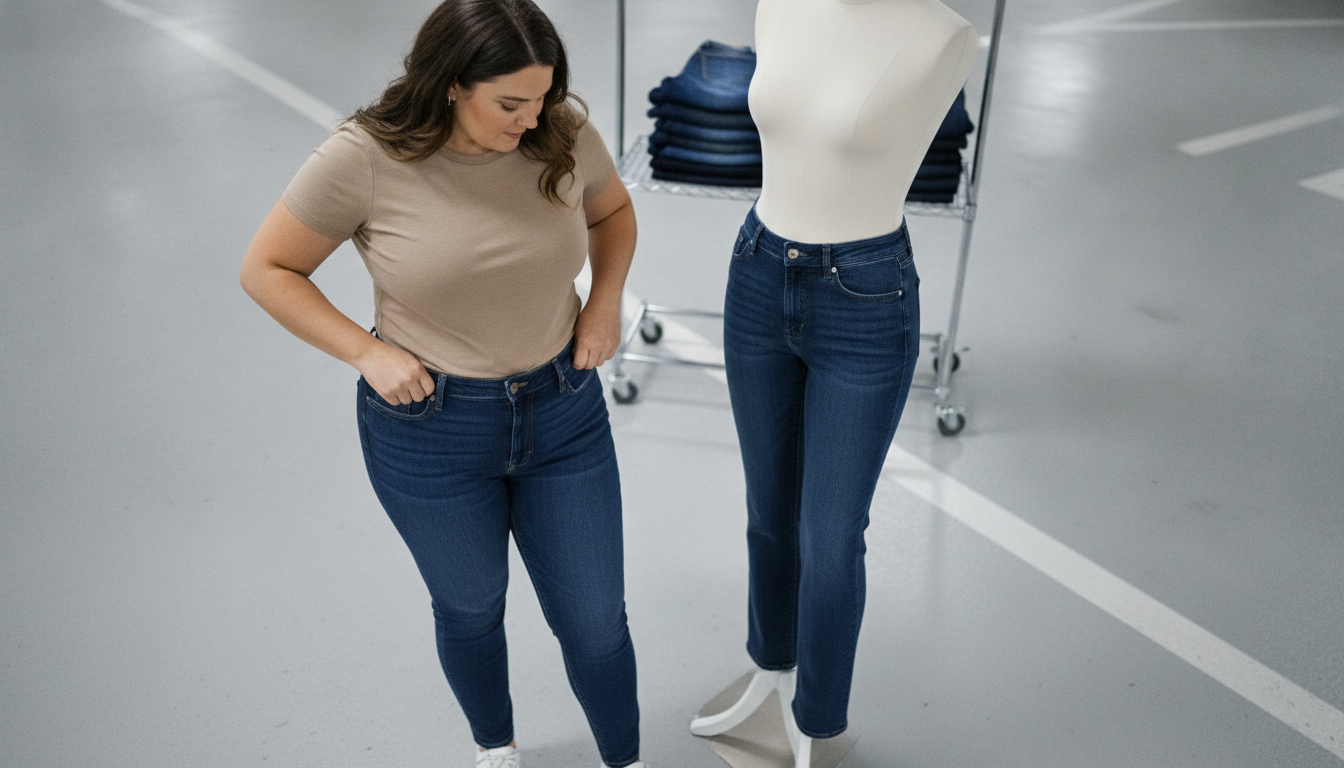
Curvy jeans are often high-waisted because the pattern is built to match a bigger difference between waist and hips. Raising the rise gives the waistband more “real estate” to sit at the narrowest part of the torso, which helps prevent gapping in back and reduces sliding or rolling during movement. For many curvier bodies, mid-rise waistbands land on a fuller area (high hip or lower belly), so the jeans can feel tighter in front but still gap at the back.
Most curvy fits add room through the seat and thighs while keeping the waist smaller. A higher waist makes it easier for designers to shape the waistband and yoke to follow curves, especially when sitting or bending. It also improves coverage: the back rise can be taller without forcing the front rise to feel uncomfortably low, which is a common problem when patterns aren’t adjusted for fuller hips and a rounder seat.
No, but it’s the most forgiving option for the broadest range of curvy proportions. Curvy mid-rise and low-rise jeans exist, but they typically need more precise patterning (and sometimes extra stretch or a contoured waistband) to avoid a gap at the back while still fitting the hips and thighs. That’s why many brands lead with high-rise curvy styles: fewer fit complaints across sizes and body shapes.
Check for a contoured waistband, a higher back rise than front rise, and enough stretch recovery so the waist doesn’t relax after wear. Details like a curved yoke seam and strategically placed pockets can also help jeans sit closer to the body without pulling. For a deeper breakdown of fit features and styling options, visit the main article.
Curvy fit jeans are cut with more room in the hips, seat, and thighs while keeping the waistband smaller to reduce back gapping. Regular fits typically assume a straighter hip-to-waist ratio.










Leave a comment